Free Shipping On All Web Orders | Sign In for Best Price

Data Center Solutions

You're under constant pressure to keep your data center running nonstop while managing rising cooling costs and protecting critical infrastructure. Even small shifts in temperature can put equipment and uptime at risk. Facilities must meet strict environmental standards like ASHRAE TC 9.9 while balancing growing cooling demands. That's why reliable monitoring and precise cooling control are essential for business continuity. 

Building Controls & Solutions supports these mission-critical environments with dependable building automation and cooling system components. We stock specialized inventory, including sensors, controllers, power monitoring equipment, and network infrastructure, designed for precise environmental control. With deep experience in complex HVAC and BAS applications, BCS helps teams maintain operational integrity and improve efficiency.

Common Data Center Cooling Challenges 

Maintaining the ideal data center environment is a complex, 24/7 operation. Cooling systems, monitoring devices, and backup infrastructure must work together without interruption to protect sensitive equipment and maintain stable operating conditions. This level of coordination brings a few recurring challenges for data center teams. It's in these areas where BCS helps strengthen performance. 

Maintaining Critical Environment Uptime

Data centers operate within tight environmental tolerances. Even minor deviations in temperature or humidity can threaten server health and cause costly outages. Consistent data center temperature monitoring is essential for identifying issues before they escalate and keeping conditions within recommended operating ranges.

Precise CRAC/CRAH Unit Control

Computer room air conditioning (CRAC) and computer room air handler (CRAH) units are central to any data center cooling strategy. These systems require accurate control and reliable communication to maintain proper airflow, cooling capacity, and humidity levels under changing load conditions. 

Hot/Cold Aisle and Rack-Level Monitoring

Hot/cold aisle containment strategies help improve cooling efficiency by separating supply and exhaust airflow. Maintaining the correct pressure relationships and temperature distribution across the space requires detailed monitoring at both the room and rack levels. Granular data center temperature monitoring allows facility teams to identify hot spots, improve airflow management, and make more informed cooling adjustments. 

Mitigating Environmental and Power Risks

Water leaks beneath raised floors, refrigerant leaks, power irregularities, and backup system failures can all threaten data center uptime if left undetected. Early leak detection systems help identify water or fluid intrusion before equipment damage occurs. Redundant monitoring solutions help confirm backup systems are operational and ready when needed. 

Mission-Critical Data Center Controls We Stock

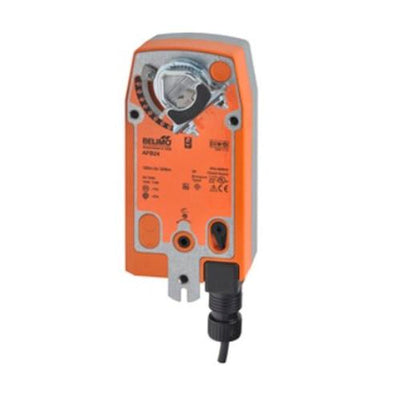
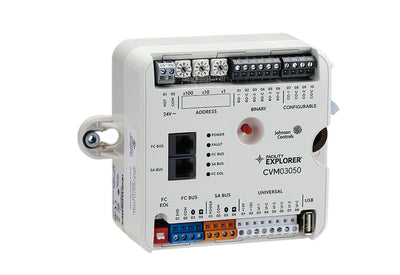
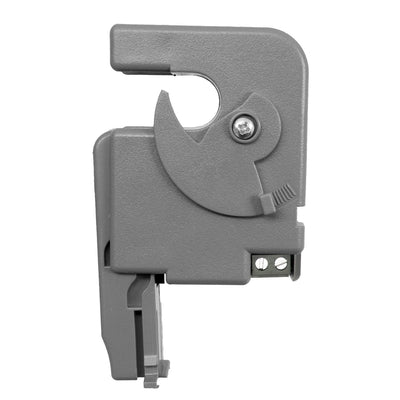
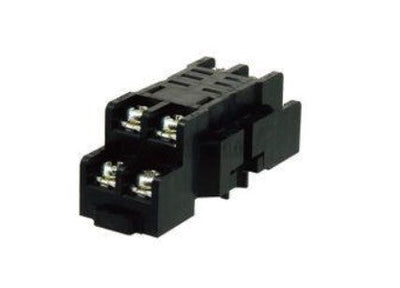
Building Controls & Solutions supplies the building automation and monitoring components needed to support resilient, high-performance data center cooling systems: 

Want more information about our products and services? Download our Data Center one-pager!

Why Data Center Teams Buy From BCS

BCS is trusted for our dependable inventory availability and technical expertise: 

  • Branches near major data center hubs: Our physical locations near major markets help you access critical parts faster and reduce delays during maintenance or emergency replacements. 
  • Specialized project sourcing: BCS can help source all the components required for a complete data center HVAC project, simplifying procurement and logistics.
  • Dedicated technical reps: You'll partner with an experienced team that understands the demands of server-room cooling, critical-environment monitoring, and BAS integration. 
  • Business account pricing and support: When you register for an account, you can enjoy streamlined purchasing and dedicated support for ongoing projects and maintenance needs. 

BCS Data Center Case Studies

Testimonials

Building Controls & Solutions has been exemplary in their role

as a project partner. Their dedication to providing solutions,

expert guidance regarding the wide range of manufacturers

they represent, and willingness to go to the lengths required to

be successful all helped ensure trust, execution, and schedule.

Sam Knesel

Project Manager, BW Design Group

Frequently Asked Questions

What is the benefit of a data center BMS?

In addition to occupant comfort, a data center BMS platform also needs to optimize various operations to maintain server uptime. The ever-growing dependence on online data can put a strain on the physical demands needed to maintain uptime. A building management system for data centers can easily meet the strict criteria, all while providing numerous financial and sustainability benefits to stakeholders.

Is a BMS system for a data center a risk for cybersecurity attacks?

A data center BMS setup doesn’t connect to the data center itself, so bad actors might not use it as a means of accessing the sensitive data stored within the servers. However, the BMS does use various forms of network communication to monitor and respond to changes in building temperature, water flow, and even personnel access. Ensure that security measures are in place to prevent hackers from taking advantage of this weak point.

Does a data center BMS affect its tier rating?

The scale and redundancies built into a BMS system can have an effect on a data center’s tier rating. A Tier 1 data center runs the risk of outages or power failures due to a basic BMS system in place that is meant to automate basic processes. However, a Tier 4 data center, used by financial institutions, energy suppliers, and high-end tech companies, has multiple redundancies across various parts of the system, including cooling, power, and network parts that meet strict requirements.

Is a data center BMS the same thing as a DCIM?

A BMS is separate from a DCIM. The former is a system designed to monitor and control the structure that houses the data center. It deals with HVAC, lighting, access, and other building-related systems. A DCIM, or data center infrastructure management system, is focused on monitoring and operating the data center itself. It looks at various metrics, including power usage, server uptime, and overall data capacity, to find ways to optimize data center performance.

How Do I Monitor for and Prevent Water Leaks Under My Raised Data Center Floors?

Install a dedicated water leak detection system. These systems use specialized sensing cables placed in the sub-floor plenum, along the perimeter of the room, and around CRAC/CRAH units. If the cable detects moisture, it sends a signal to a control panel, triggering an audible alarm and alerting your central building management system (BMS), enabling a fast response before critical damage occurs.

What Is PUE, and What Components Do I Need to Measure It?

Power usage effectiveness (PUE) is the industry standard for measuring data center energy efficiency. It's a ratio calculated by dividing the Total Facility Energy by the IT Equipment Energy. You need power meters on the main utility feed and at the rack level to measure the power consumed by servers, storage, and network gear.

Do Your Controllers Work With Both CRAC and CRAH Units?

Modern DDC controllers from brands like Honeywell and Schneider Electric are highly flexible. They use open protocols like BACnet and Modbus to integrate with, monitor, and control virtually any CRAC or CRAH unit. Our technical specialists can help you select the controller with the right I/O to match your specific equipment.

Talk to a Data Centers Specialist 

Protect uptime and support long-term data center performance with reliable environmental control solutions from BCS. Whether you need help sourcing critical components or planning a data center automation project, our team can help. Contact us today to find the right solution for your facility.  

Your Local Branch

Enter your ZIP code to show local inventory.
View Map

Austin

9705 Burnet Road, Suite 312
Austin, TX 78758
(512) 612-9233
Set As My Branch

Boston

30 Vineland St
Brighton, MA 02135
(617) 206-3737
Set As My Branch

Charlotte

9800 Southern Pine Blvd. Suite N.
Charlotte, NC 28273
(980) 397-0455
Set As My Branch

Dallas

2241 Valwood Parkway, Suite 200
Farmers Branch, TX 75234
(214) 390-2201
Set As My Branch

Houston

1434 W Sam Houston Pkwy N, #190
Houston, TX 77043
(281) 744-4356
Set As My Branch

Milwaukee

11250 West Lapham St
West Allis, WI 53214
(414) 455-0562
Set As My Branch

Minneapolis

3340 Gorham Ave
Minneapolis, MN 55426
(952) 388-2221
Set As My Branch

Nashville

820 Fesslers Parkway
Nashville, TN 37210
(615) 258-7474
Set As My Branch

New Jersey

1095 Cranbury South River Rd STE 1
Jamesburg, NJ 08831
(201) 377-2333
Set As My Branch

New Orleans

5401 Jefferson Hwy, Suite G
Harahan, LA 70123
(504) 576-0556
Set As My Branch

New York

233 West 29th Street
New York, NY 10001
(212) 488-0229
Set As My Branch

Phoenix

1555 W University Dr Ste 106
Tempe, AZ 85281
(480) 682-5966
Set As My Branch

Salt Lake City

3186 South Washington Street
Salt Lake City, UT 84115
(385) 355-6659
Set As My Branch

San Antonio

11906 Warfield
San Antonio, TX 78216
(210) 874-7202
Set As My Branch

Virginia Beach

568 Central Drive
Virginia Beach, VA 23454
(858) 263-0523
Set As My Branch